Tuesday, March 21, 2006

BB pivot

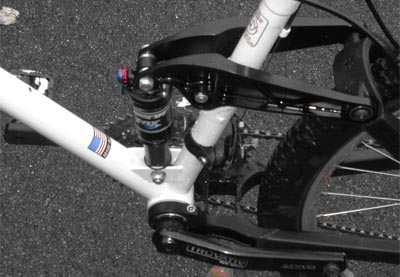
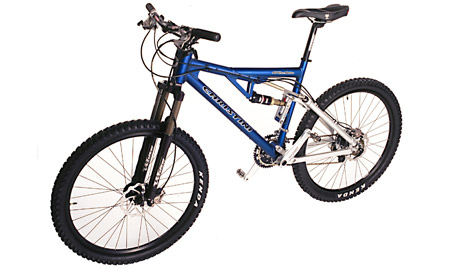
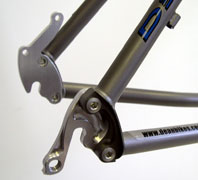
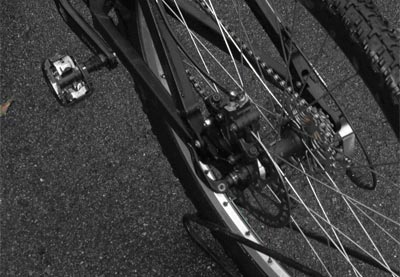
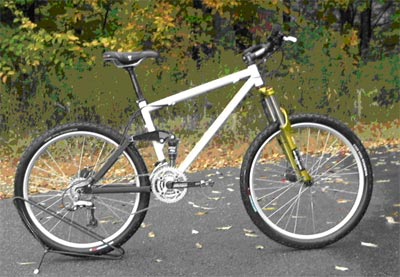
Most four bar linkage full suspension bike have their main pivot just above the bottom bracket. Since pedaling feedback come from a variation in the chain lengh, this pivot should ideally be placed on the BB instead of near it. This would equal a constant chain lengh no matter where the bike is in its travel, without the use of a crazy pivot system (like the Giant Maestro). Probably that the design constrains were to have bearing small enough to get around the bb while being still strong. Several manufacturer have produced such a design. Jamis with the carbon Diablo, Rotec, Dean and then this custom frame builder. The bike shown here succeded well on this task. The bearings are german needle bearing, both small in diameter and strong (the rear-end looks a lot like a Dean). The design are is a faux-bar, with the secondary pivot on the rearstay instead of on the chainstay. This a maybe more prone to brake-lock than the patented Specialized horst-link, but it ensure that the chain is always at the same lengh. This would allow this bike to run a single-speed cog, are more logically for a 2000$ frame, a Rohloff hub. The downfall of this design is that a little bit a chaingrow might be good for traction, but again, at the price of pedaling feedback. This bike is made by a small american frame builder out of steel. I lost the manufacturer website, but I will had it to this post soon.
Thursday, March 16, 2006

Titus Exogrid


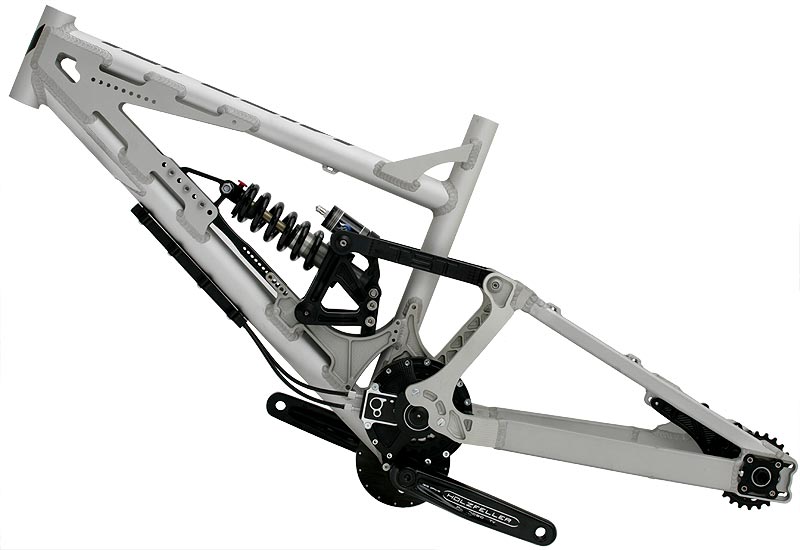
Good design in not just about mechanical properties. It's also making things beautiful. You you at the Titus Exogrid tubing. It is made out of machined titanium with an underlayer of carbon. They could have made the titanium holes industrial looking with FEA. Instead, they push the design up to put their brand on the tube. Beautiful! This is the kind of raffinent I like. Carved lugs for steel bike is great, but it is to past inclined for me. I prefer futuristic things like the Exogrid.

Subscription


There are many ways to read this blog:
  1. watch it several times a week, preferably while pretending to work.
  2. get the RSS feed alerts on My Yahoo or other news readers.
  3. receive it by email with Feedblitz (write your email in the ''subscribe me'' space.

Tuesday, March 14, 2006

Single-speed drop-out


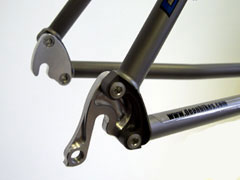
Single-speeds are cool, but they have a big downside. The rear hub can slide in the drop-out under heavy torque. Many solution exist. First, Paul Component designed a drop-out with a screw to ajust after the wheel is in the proper position. The design is simple and neat. More interesting are the Paragon Machine work slinding drop-out. More complicated but they have the major advantage of allowing the use of disk-brake without crazy solution (like the one from Paul Component). Another solution that allow disk-brake is the eccentric bottom bracket. It allow regular vertical drop-out for the price of weight, complexity and money. It is a paradox to see that a bike designed to be simpler become quite a headache!

White industrie Eccentric hub


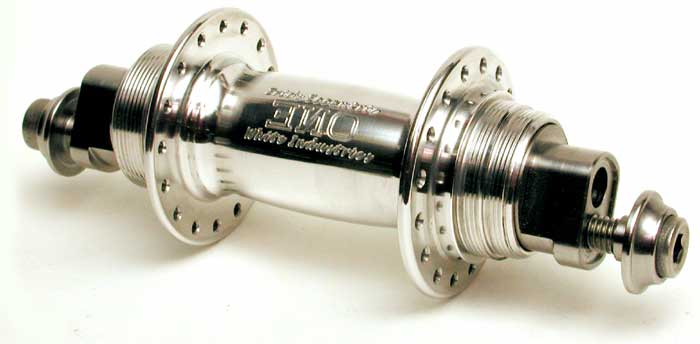
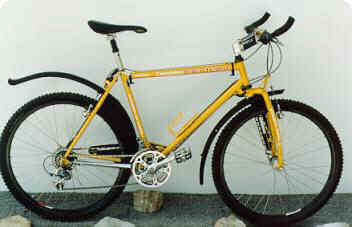
There are many solutions for transforming a regularvertical drop-outs equipped mountain bike to a single-speed. First, you can be lucky so your chainstay/chainring/sprocket combinaison is exactly want you need to obtain the right chain tension. Or you can toy with differents gears until it fits. For this, you have to be quite flexible on the gear size you can propel. A popular solution is to add a chain tensioner. It works like a derailleur, but at my opinion, itdisturb the single-speed harmony and a bit of the efficiency (the Paul component version is pictured here). A better looking alternative is the White Industrie Eccentric hub. It's axle can move reporting to the frame, so a perfect chain tension can be achived. It cost 159 US$ Finally, a more radical alternative for steel frames is to change the drop-outs for horizontal ones. This may cost around 40$ in material and 200$ in labor, plus a new paint job. At my opinion, all these alternative are far from perfect. A better idea would be to sale the frame and to buy a single-speed specific one. Why not? Maybe it is time for a new baby!

Tuesday, February 07, 2006

Gearbox continued

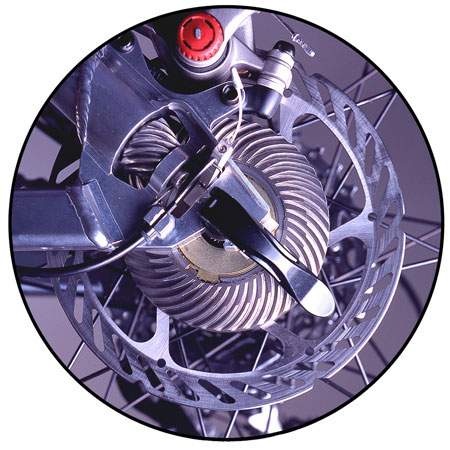
Following my post on G-boxx, I saw a gearbox prototype from Hayes showed in Interbike. It is made from a road bike cassette and a very simple derailler that push a pulley across the cassette. The design is good because it is simple stupid, much more simpler than a Rohloff hub. The good part is than standard parts are used here, simplifing replacement, which is a good departure form the geared hub gearboxes. However, this design puts a lot of load on the small chain, leading perhaps to breakage and wear. An overdesigned chain would be welcome here. The compangy said it is open for builders wanting to add the gearbox to their bikes. It is not probable than this design would be light enought for XC bikes, but it might be good for DH ones. The benefits are that

G-boxx


The G-boxx project (http://www.g-boxx.org/) is to create a open-source platform for derailleur-less bicycle. The main objective is to get rid of the breakage prone parts like derailleurs and dished-wheels. A G-boxx bike will typically have a gear box system consiting of either a chain based or a geared hub based system. The result unable a full suspension bike to have a single pivot located in the best spot while still having the main gear situated a the center of the main pivot. It also give the bike a stunning look! The one picutured above is a Nicolai, a mechanical marvel costing about 4000$ frame only. More about Nicolai later. Pictures: www.nicolai.net/

AWD bicycle part 2


Another AWD bicycle design that comes from my home province of Quebec. It's chain driven and it's weight about 45 pounds. The manufacturer said that it is used somewere by soldiers in the desert. The design is not as clean as the one that have been previously discussed. I don't know if this design could handle a full-suspension setup. The point is still if a driving front wheel is needed. Cycling puts so much weight on the rear wheel that gives it a lot of traction. A little bit like front and rear braking, the former being way much more efficient. Picture: manufacturer website: www.chartran.com

Tuesday, December 20, 2005

AWD bicycle


There are several AWD bike design out there. Some use a scary combinaison of chains. Others use cables to propel the front wheel. I never saw a AWD bike design a clean a those from Christini bikes. The idea is tho use a shaft to transfert power to the front wheel. The shaft runs in the frame and the fork, with a clutch located in the headset. What is quite amazing is that this design allow the use of modern suspension design and parts, like you would find on any high-end bikes. This bike use proprietary hubs, headset and a custom-made White Bros. fork. It should be really tough, since a motorcycle version is made! The complete setup add 2.3 lbs and an XT/XTR full suspension bike is about 3700 USD. Not bad, when you see this marvel of engineering and machining. Idea: use the shaft drive to make a completly enclosed sealed maintenance-free drivetrain for real mountain bike use. Pictures: manufacturer website: http://www.christini.com/

Sunday, December 18, 2005

Dean interchangeable drop-outs


These days, there is a lot of hype toward single-speed bikes. They are just about everyware. It is a kind of conter-culture against the complexity of todays mountain bikes. I think that they are a good thing since you spend less time maintaining and more time riding. BUT, I'm I interested in purchasing a bike with such a limited usage? What if a want gears in about 5 years? The solution can be purchasing a normal frame and adding a chain tension adjuster. But this is a looser solution. What if a could change the drop-outs the suit my attitude toward gears? The Dean's drop-outs address this problem. They are fully interchangeable. And not to expensive at 50$ per set. Not so bad, since they are titanium. Another benefit is that they can be completly changed in the case of a crash, for the price it would have costed for a simple poorly shifting replacable derailleur hanger. If I would have to money to buy a Dean, sure that I would pay a premium for these drop-outs. And on all my bike. Why not converting a road racer to a track bike for the end of the season. Or having a single-speed at spring when it is so muddy that gears don't change anyway. That is very great design.

Saturday, December 17, 2005

Bikedrive


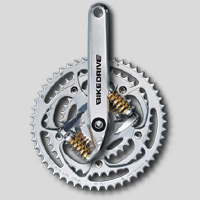
The idea here is to have a perfect pedalling motion by storing energy in the most powerful part of the cycle to release it in the so-called dead spot. This is done by two steel coil springs. This may work, but it is sure that it is a more complicated and heavy unit. The price for these Austria made crank is not provided by the manufacturer.
Picture: http://www.bikedrive.com/english/index.htm

Syncro-shift


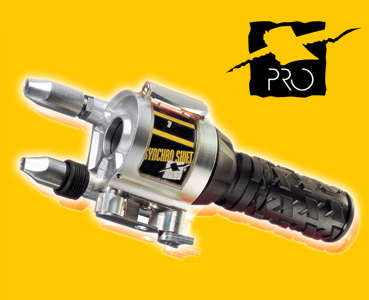
Why are we obliged to shift with both hands? Having two derailleurs to choose from makes us doing chain-crosses and no-so efficient shifts. Why are drivetrains marketed with 27 gears when there is just about 14 usable ones? Synchro-shift was made to address this problems. You keep your regular derailleurs, both the shifter takes care of which gear selection is optimal. It has barrels that accuate both derailleurs as you turn the grip. No more big-big, small-small combinaison. The shifter shift the front and rear derailleurs in tandem to have a real ''sequential'' shifter. The chain can be shortened. This is good, BUT: if the rear D is reliable under tension, but the front isn't. In sketchy situations, I will avid to shift up-front because I'm not sure of the result. You can't choose that with the syncro-shift. Shifting up-front is a good thing if you what a big change, like just before a big climb preceded by a downhill. Altrough Syncro-shift have a racing team and an titanium racing unit, I rather keep these shifters for commuting or idealy for my girlfriend. She's the perfect consummer for synchro-shift: someone who don't know how to shift. Great design, but with limitations.

Thursday, December 15, 2005

sealed component reflexion part 2: BB

Think about a moving bicycle part that you almost never hear about. Not the crankset, it is just two pieces of metal. What impress me is the durability of sealed bottom brackets. They cost about 30$ for up to 5 years. There are 100% maintenance free and they are one of the most solicited part one a bicycle. Quite amazing. When the were loose bearing with cones, they were crappy unit. After they went to a cartridge form, they are one of the most durable part on a bike. How are they that good? Maybe because they are not sexy, so they don't have to be to light or underbuilt. Don't know. What I'm sure of is that every component should be as well designed.

Monday, December 12, 2005

hydraulic derailleur


more about that later
Pictures from: http://weightweenies.starbike.com/articles.php?ID=28

Sealed parts reflexion

Components makers have started a good move these days. They are moving from the racing type a parts to a more board type a riding type. Shimano Hone group is a good exemple. It is made to be very tough, but not to heavy like it Saint counterpart. A group for everybody. It should displace LX, which could be marketed now as a group for racers on the budget. I'm glad to see that manufacurer make such a move. They have solved one of the greatest problem of mountain biking: solidity. But I urge them to look at another big issue: contamination. It is quite amazing to see that a bike a almost always covered by dust and mud and that most of its parts are not sealed. The whole drivetrain is completly exposed, which cause awesome wear and a lot of maintenance. My ratio is 4 h biking: 1h washing and fixing. This could be solved by good engineering. One exemple is Jagwire Raincoat. It seals the housing for about 10$ per bike and now cables and housing can last more than a season, which a a big leap forward. Why not sealing derailleur pivot and cage? Protecting the chain? It is possible.

USE suspension fork


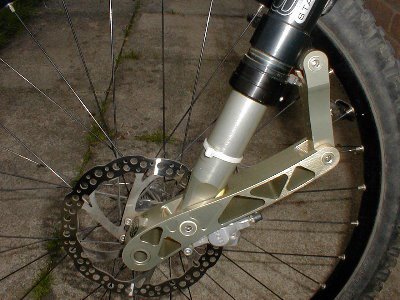
It is quite incredible to see how many rear suspension design are there. It is even more surprising to see that telescopic forks are on about every bikes. Surprising too that so few design competes with it. It still amazes me to see that frame manufacturer competes heavily on rear suspension design and that they left the front end market to fork makers. The telescopic design as so many flaws. Brake dive, pogo-action, sloppy bushings (especialy on Manitou and Fox). Prone to desintegration (Rock Shox). There is the Cannondale Lefty, but it is about it. There were a few linkage forks (AMP, Girvin) but they are now out of the market. Both were prone to sloppy bearings and an heavy maintenance routine. The post is about the USE anti-dive fork. This design is said to resist brake-dive, which is a very annoying problem with telescopics. The pivot is located so the brake torque extend the suspension instead of compressing it, leaving more travel to absorb bumps. The design is quite impressive, with a massive linkage and a Lefty-like monoleg. The wheel is held by a special hub and axel combinaison. The price also is impressive: 1400$, which is about 200$ more than a top-of-the line Fox. The fork is air and coil sprung and air damped. I wish it had a platform damper and maybe a lock-out, but these things are maybe less needed than a on conventional style fork. It is great to see that people are still thinking out of the box about suspension forks. Some reviewers said that it rides like a 4 inches fork, since more travel if left after braking. Why not paying 200$ more if you were ready to buy a 500$ premium on a hyper-efficient frame?
manufacturer web-site: www.use1.com/
See http://www.justridingalong.com/biking/review_sub.php for a review.

Sunday, December 11, 2005

other design blogs

I'm not the only one interested by bicycle design. Check out http://bicycledesign.blogspot.com/
very interesting.

Bamboo bike


I always wanted to build a bike. Since my uncle is a composite engineer, we had the project to build a bike out off a pressure-treated cedar-carbone laminate. Then I went to college, so the project was postponed. This guy succeed in building a very clean looking bamboo bike. Composite are just a mix of two materials. Bamboo is not an exception since it is a mix of two natural structure that are the arteries and the veins of the tree: the xyleme and the phloeme (not sure it is written this way in English). Bamboo are around since the beginning of the 20th century, when they were lighter and stronger then their steel conterparts. Since this bamboo bike is around 4 pounds, I'm pretty sure that this number can be lowered by some optimisation and sanding. Anyway, the strengh of this design is its beautifulness, not the mention the shock-damping proprieties of the bamboo!
Picture from: http://www.bmeres.com/bambooframe.htm

Dahon Allegro


This blog is all about design, right? So, why posting about a taiwanese bike? Because I'm currently in France for studying, so I would sale my soul for a performance bike that I could have brought from Canada and then travelled with. So come the Dahon Allegro. It's a full size road bike the folds in an airline friendly case. The idea is to avoid the pay for either the airlines fees and 500 $ plane-tough plastic box. The Allegro strenght is how clean is it's breakaway design. Just two special lugs, just 98 extra grams. It may sounds scary that the downtube is held to the rest of the frame by just a small collar, but it was designed by Tom Ritchey, so it inspires confidence. Ritchey's component have always been strong, functionnal and lightweight, without being overly complicated. So the Allegro should be. The frame is made from WCS steel tubing. Altough heavier than aluminium this frame is probably below the 3.5 pounds mark, the entire bike weighting just 18.3 lbs. The Allegro have an Ultegra 10 speeds drivetrain and ultra light American Classic wheels for just 2000 USD. So you have a fine steel bike for the less than you would have paid for a similary equiped bike. Pictures: dahon web site.